Top Soundbar Buying Guide 2026: How to Choose the Perfect Soundbar for Your Home
Discover the ultimate Soundbar Buying Guide 2026 with expert tips on Dolby Atmos, HDMI eARC, room size, sound quality, and...
Looking for the best office chair? This Office Chair Buying Guide 2026 explains ergonomic features, lumbar support, chair materials, sizing, and buying tips to help you choose the perfect office chair for long hours.
Buying an office chair may seem simple, but the wrong choice can affect your comfort, productivity, and long-term health. This Office Chair Buying Guide will help you understand the essential features to consider before making a purchase. Whether you work from home or in a corporate environment, this Office Chair Buying Guide covers everything you need to know.
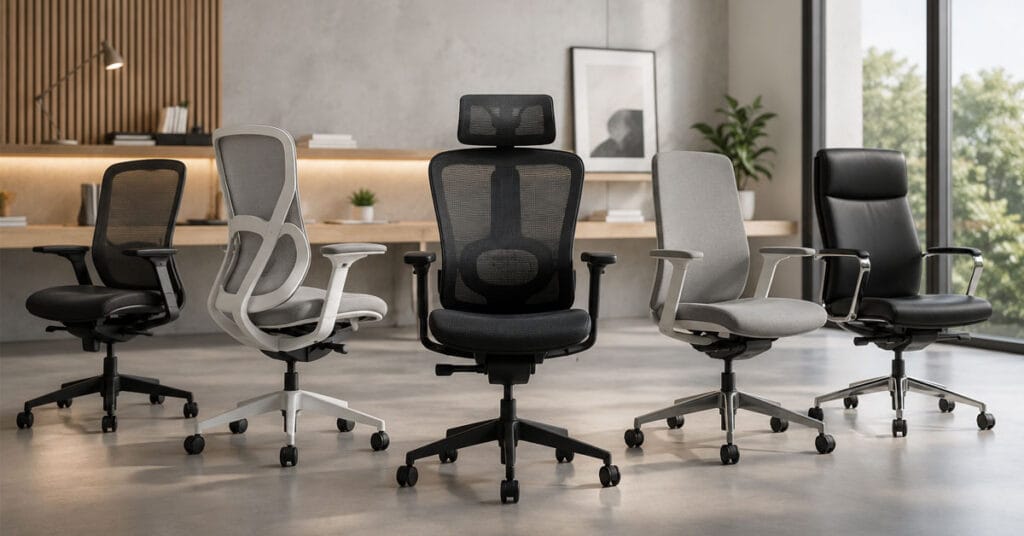
Whether you’re working from home, managing a corporate office, attending online classes, or gaming for hours, your office chair plays a critical role in your comfort and productivity. Yet many people spend weeks researching laptops and desks while choosing a chair based solely on looks or price.
The result? Back pain, poor posture, fatigue, and frequent chair replacements.
This comprehensive Office Chair Buying Guide will help you understand exactly what to look for before purchasing an office chair, ensuring that your investment supports both your health and productivity for years to come.
A quality chair is one of the most important workplace investments. This Office Chair Buying Guide focuses on ergonomics, adjustability, materials, and durability to help you make an informed decision.
The average professional spends between 6 and 10 hours sitting each day. A poorly designed chair can lead to:
Lower back pain
Neck and shoulder strain
Poor blood circulation
Reduced focus and productivity
Long-term posture problems
A quality ergonomic office chair helps maintain natural spinal alignment, reduces pressure points, and keeps you comfortable during extended work sessions.
When following an Office Chair Buying Guide, pay special attention to lumbar support, seat depth, armrests, and reclining functions.
Before shopping, identify your daily sitting duration.
Light Usage (1–4 Hours Daily)
A basic ergonomic chair with height adjustment and adequate cushioning is usually sufficient.
Moderate Usage (4–8 Hours Daily)
Look for:
Invest in a premium ergonomic chair featuring:
The longer you sit, the more important advanced ergonomic features become.
Many chairs advertise themselves as “ergonomic,” but not all truly provide ergonomic support.
A genuine ergonomic office chair should adapt to your body rather than forcing your body to adapt to it.
Essential Ergonomic Features
Adjustable Seat Height
Your feet should rest flat on the floor while your knees remain at approximately 90 degrees.
Lumbar Support
The chair should support the natural curve of your lower spine.
Recline Mechanism
A slight recline between 100° and 110° often reduces pressure on the spine during prolonged sitting.
Adjustable Armrests
Your shoulders should remain relaxed while your elbows rest comfortably near your body.
Adjustable Headrest
Useful for individuals who spend long hours working or frequently lean back while reading or attending meetings.
The material significantly affects comfort and durability.
Mesh Office Chairs
Advantages:
Excellent airflow
Cooler in warm climates
Lightweight design
Best for:
Work-from-home users
Hot and humid environments
Long sitting sessions
Fabric Chairs
Advantages:
Soft seating experience
Comfortable year-round
Available in various styles
Best for:
General office use
Moderate sitting durations
Leather and Leatherette Chairs
Advantages:
Premium appearance
Executive aesthetics
Disadvantages:
Can become hot during long sessions
Less breathable
Best for:
Executive cabins
Conference rooms
One of the biggest mistakes buyers make is ignoring chair dimensions.
Seat Depth
A seat that is too deep can place pressure behind your knees.
A seat that is too shallow may fail to support your thighs properly.
Ideally, there should be about two to three fingers’ width between the seat edge and the back of your knees.
Seat Width
The seat should provide enough room for comfortable movement without feeling restrictive.
Weight Capacity
Always verify the manufacturer’s weight rating.
A chair operating near its maximum limit may wear out faster.
Armrests play a larger role in ergonomics than many people realize.
Fixed Armrests
Lowest cost
Limited customization
2D Armrests
Height and angle adjustments
3D Armrests
Height, forward/backward movement, and pivot
4D Armrests
Full adjustment including width
For professionals spending more than six hours daily at a desk, 3D or 4D armrests are highly recommended.
Not all lumbar support systems are equal.
Fixed Lumbar Support
Basic support with no customization.
Adjustable Lumbar Support
Allows users to move support vertically or adjust firmness.
Dynamic Lumbar Support
Automatically adapts to movement and posture changes.
For individuals with back pain, adjustable lumbar support should be considered essential.
Many office chairs appear impressive online but fail in real-world use.
Watch out for:
Instead, focus on measurable specifications and verified user reviews.
A quality office chair should last several years.
Gas Lift
Choose chairs with certified gas lift mechanisms for reliable height adjustment.
Chair Base
Metal or reinforced nylon bases generally offer better durability than low-quality plastic alternatives.
Casters
Smooth-rolling wheels protect flooring and improve mobility.
Warranty
Look for warranties covering structural components, mechanisms, and moving parts.
A longer warranty often reflects greater manufacturer confidence.
Even the best office chair may perform poorly if it doesn’t fit your desk setup.
Consider:
Your chair should integrate seamlessly into your workstation.
A practical Office Chair Buying Guide helps buyers balance cost, features, and durability.
Under ₹5,000
Basic office chairs suitable for occasional use.
₹5,000–₹10,000
Entry-level ergonomic chairs with decent adjustability.
₹10,000–₹20,000
The sweet spot for most professionals.
Expect:
Adjustable lumbar support
Mesh backrests
Headrests
Multiple armrest adjustments
₹20,000+
Premium ergonomic chairs offering superior durability, customization, and long-term comfort.
Not every user has the same requirements. A comprehensive Office Chair Buying Guide should consider remote workers, executives, students, and gamers.
Avoid these costly errors:
Buying solely based on appearance.
Ignoring lumbar support.
Choosing the cheapest option available.
Overlooking warranty coverage.
Not checking chair dimensions.
Ignoring adjustability features.
Purchasing without considering daily usage hours.
Falling for vague “ergonomic” marketing claims.
A good office chair is not a luxury—it’s an investment in your health, comfort, and productivity. The best office chair buying decision isn’t necessarily the most expensive chair, but the one that fits your body, work habits, and workspace requirements.
Before making a purchase, evaluate ergonomics, adjustability, material quality, seat dimensions, and warranty coverage. Taking the time to choose the right chair today can help prevent discomfort and improve work performance for years to come.
This Office Chair Buying Guide demonstrates that choosing the right chair involves much more than comparing prices. By following this Office Chair Buying Guide, you can select a chair that supports your posture, improves productivity, and provides long-term value. If you’re planning a purchase in 2026, use this Office Chair Buying Guide as your checklist before making a final decision.
The most important feature is ergonomic adjustability. A good office chair should offer adjustable seat height, lumbar support, armrests, and reclining functions to help maintain proper posture during long work hours.
Mesh office chairs provide better airflow and help keep you cool during long sitting sessions. Cushioned chairs may offer a softer seating experience, but high-quality foam is essential to prevent flattening over time.
For regular office use, a quality ergonomic chair generally starts in the mid-range category. Higher-priced models often provide better materials, more adjustment options, improved durability, and longer warranties.
Yes. Proper lumbar support helps maintain the natural curve of your spine and can reduce lower back strain during extended periods of sitting.
Some gaming chairs can be comfortable, but ergonomic office chairs are usually a better choice for productivity and long-term posture support because they focus on adjustability and ergonomics rather than aesthetics.
For long working hours, choose an ergonomic chair with adjustable lumbar support, seat depth adjustment, armrests, breathable materials, and a reclining mechanism.
Your feet should rest flat on the floor, your knees should form roughly a 90-degree angle, and there should be a small gap between the edge of the seat and the back of your knees.
A headrest is not essential for everyone, but it can provide additional neck and upper-back support, especially during long meetings or reclining breaks.
High-quality mesh, commercial-grade fabric, and premium foam cushions tend to provide the best combination of durability, comfort, and breathability.
A well-built ergonomic office chair can typically last between 5 and 10 years or longer, depending on build quality, usage, and maintenance.
Follow us on Twitter
Top Soundbar Buying Guide 2026: How to Choose the Perfect Soundbar for Your Home

Last Updated: June 9, 2026