Best 55 Inch TV in India 2026: Complete Buying Guide for Home Cinema, Picture Quality & Smart Features
Discover the best 55 inch TV in India 2026 with our expert buying guide. Compare OLED, QLED, Mini LED, smart...
Wondering if a standing desk for working from home is worth the investment in 2026? Discover the benefits, drawbacks, costs, and practical alternatives before upgrading your home office.
The rise of remote work has transformed spare bedrooms, dining tables, and living room corners into permanent workspaces. As more professionals invest in ergonomic home office setups, one piece of furniture continues to generate debate: the standing desk for working from home.
Browse any productivity forum, home office guide, or workspace inspiration gallery, and you’ll likely find height-adjustable desks being promoted as the ultimate solution for comfort and productivity. But are they really necessary? Or are they simply another expensive trend in the growing home office market?
If you’re considering purchasing a standing desk for working from home, this guide will help you determine whether the investment makes sense for your needs, budget, and work habits.
For decades, office work revolved around sitting for eight or more hours daily. As research began highlighting the negative effects of prolonged sitting, workplace wellness experts started promoting movement throughout the workday.
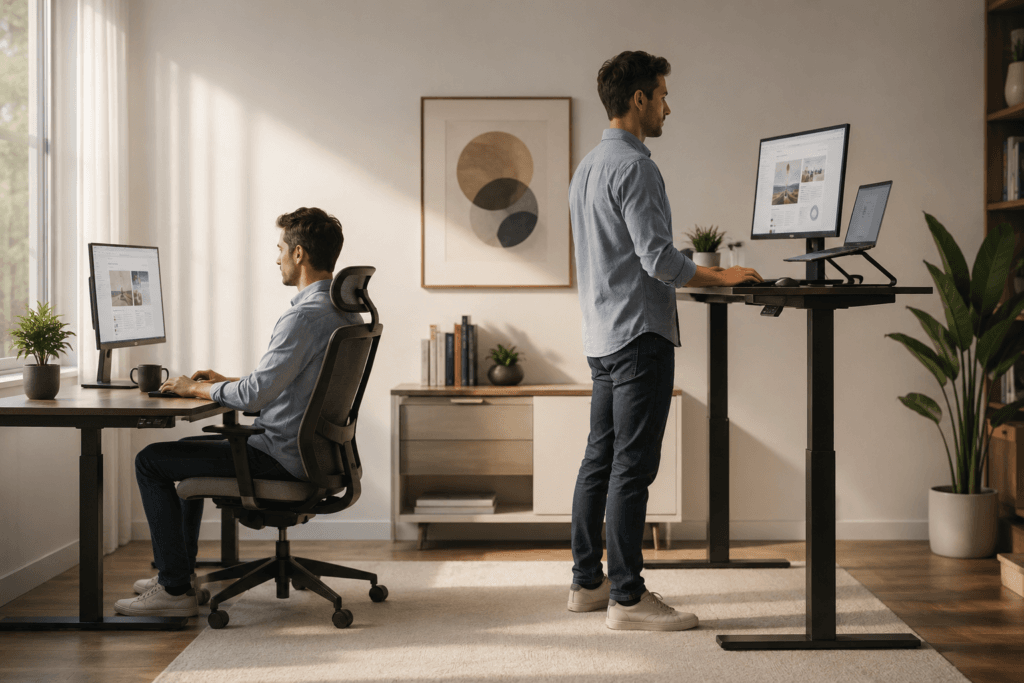
This led to the popularity of the standing desk for working from home and traditional offices alike. Modern standing desks allow users to switch between sitting and standing positions with the push of a button or manual adjustment mechanism.
The promise is simple:
Reduce sedentary behavior
Improve posture
Increase movement
Enhance focus
Create a healthier work environment
However, the reality is often more nuanced than marketing claims suggest.
One of the biggest advantages of a standing desk for working from home is that it makes movement easier and more natural.
Instead of remaining seated for hours, users can alternate positions throughout the day. Even small changes in posture can help reduce stiffness and discomfort.
Many remote workers find themselves standing during:
The key benefit isn’t standing itself—it’s reducing prolonged inactivity.
Poor posture is common among remote workers.
Kitchen chairs, couches, and makeshift desks often lead to neck strain and lower back pain. A properly adjusted standing desk for working from home can help users maintain a more neutral working posture.
When combined with:
An ergonomic chair
Proper monitor placement
External keyboard and mouse
A standing desk may contribute to improved comfort during long workdays.
Many users report feeling more alert while standing.
Standing naturally promotes greater engagement and can help combat the afternoon energy slump that many remote workers experience.
While standing won’t magically increase productivity, changing positions throughout the day can make work feel less monotonous.
Modern height-adjustable desks are incredibly versatile.
Whether you’re working on spreadsheets, attending virtual meetings, or sketching ideas on paper, a standing desk for working from home allows you to customize your workspace for different tasks.
This flexibility is often more valuable than the standing feature itself.
Despite the benefits, standing desks are not a miracle solution.
One of the biggest misconceptions is that standing is always better than sitting.
In reality:
Excessive standing can cause fatigue
Leg discomfort may increase
Foot pain can develop
Joint strain may occur
Health experts generally recommend alternating between sitting and standing rather than replacing sitting entirely.
The best approach is movement, not constant standing.
A quality standing desk for working from home often costs significantly more than a traditional desk.
Typical pricing in India:
| Type | Approximate Cost |
|---|---|
| Basic Manual Standing Desk | ₹12,000–₹20,000 |
| Mid-Range Adjustable Desk | ₹20,000–₹40,000 |
| Premium Electric Standing Desk | ₹40,000–₹80,000+ |
For many people, investing in a better chair may provide greater comfort benefits than purchasing an expensive standing desk.
Many buyers assume they’ll stand for several hours every day.
The reality is often different.
After the novelty wears off, some users rarely adjust their desks and end up using them like traditional desks.
Without building standing habits into your routine, the investment may provide limited value.
A complete standing workstation often requires:
These additional purchases can significantly increase the total setup cost.
A standing desk for working from home may be worth considering if you:
You Work Full-Time From Home
Remote professionals spending 6–10 hours daily at a desk can benefit most from adjustable workstations.
You Experience Sitting-Related Discomfort
If prolonged sitting causes stiffness, lower back pain, or posture issues, alternating positions may provide relief.
You Enjoy Active Work Habits
People who frequently take calls, attend meetings, or brainstorm often appreciate the flexibility of standing.
You Plan to Use It Consistently
The benefits depend on regular use. If you’re unlikely to change positions throughout the day, a standing desk may not deliver meaningful results.
A standing desk for working from home may not be necessary if:
In many cases, investing in an ergonomic chair, monitor stand, and proper desk setup can provide greater value.
Not ready to spend thousands on a new desk?
Consider these alternatives:
These platforms sit on top of an existing desk and raise your monitor and keyboard.
Benefits include:
Standing for a few minutes every hour can provide many of the same benefits without purchasing new furniture.
A high-quality ergonomic chair often improves comfort more than a standing desk.
Proper screen positioning can dramatically improve posture without replacing your entire workstation.
If you decide to purchase a standing desk for working from home, follow these best practices:
Avoid standing continuously.
A practical starting ratio is:
Ensure:
Supportive shoes or an anti-fatigue mat can reduce pressure on your feet and legs.
Shift weight, stretch, and walk regularly.
Remember: movement matters more than standing.
A standing desk for working from home can be a valuable investment for people who spend long hours at their desks and actively use the sit-stand functionality. It offers flexibility, encourages movement, and may improve comfort when combined with proper ergonomic practices.
However, it is not an essential purchase for everyone.
If your budget is limited, upgrading your chair, improving monitor placement, and building healthier movement habits may provide greater benefits at a lower cost.
The most effective home office isn’t necessarily the most expensive one. It’s the workspace that supports your productivity, comfort, and long-term health.
Before purchasing a standing desk, honestly evaluate your work habits. If you’ll use it regularly, it can be a worthwhile upgrade. If not, simpler ergonomic improvements may deliver a better return on investment.
What Home Office Equipment Worth the Money? A Practical Guide to Smart Workspace Investments in 2026
Follow us on Twitter/X

Last Updated: June 12, 2026